
Optimize for Professional Clients: Avoid Hidden Risks
Business Strategy, Targeting Professionals, B2B & B2C Growth
The Hidden Dangers of Not Optimizing Your Business for Professional Clients and Consumers (and Why Many Will Fail Without Smart Technology in the Next 5 Years)
If your best professional and consumer clients discovered how much more tailored, efficient, and data‑driven your competitors are, would they still choose you? In today’s B2B and B2C landscape, buyers don’t have time for guesswork. They scan, filter, and dismiss anything that doesn’t speak directly to their world—and they increasingly expect technology‑enabled, insight‑rich experiences as the default, not a bonus. For a deeper dive into how this plays out across the customer journey, explore our guide on optimizing digital journeys for B2B and B2C buyers.
When your business isn’t optimized to communicate clearly with professional buyers and informed consumers—and you’re slow to adopt the smart tools they now take for granted—you don’t just miss opportunities. You quietly erode trust, authority, and long‑term revenue while more focused, tech‑enabled competitors move in. This article unpacks the real risks of neglecting professional and consumer targeting, and what it costs you in visibility, positioning, and profit over the next five years. If you’re also wrestling with where to start on the tech side, you may want to read our article on building a smart technology roadmap for growing businesses.
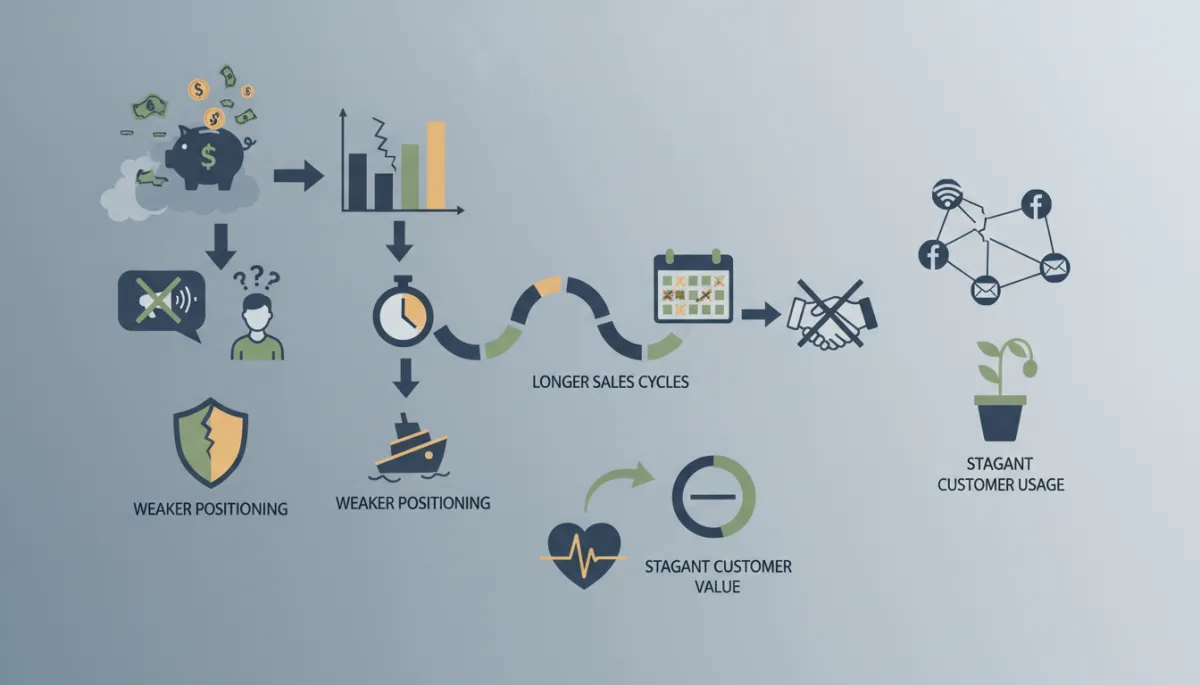
When Your Message Misses the Mark
Unoptimized targeting quietly drains revenue and reputation
“B2B buyers are now 57% of the way through the purchase decision before they ever engage with a sales rep, which means your digital positioning and targeting do most of the early selling.”
— CEB (now Gartner), B2B Buyer’s Journey Research
Why “Everyone” Is Not a Target Market—Especially in B2B and B2C
Many businesses fall into the trap of believing that casting a wide net brings more opportunity. In reality, trying to speak to everyone means you resonate deeply with no one—a particularly costly mistake when your ideal audience is made up of professionals, decision‑makers, and increasingly sophisticated consumers with very specific needs and expectations. To see how narrow positioning can actually expand your pipeline, check out our post on using niche positioning to unlock growth in B2B and B2C.
Professionals—whether they are executives, consultants, lawyers, engineers, or healthcare providers—make decisions differently from general consumers. They:
Evaluate solutions based on ROI, efficiency, and risk reduction, not impulse.
Expect credible proof: case studies, data, and references they can trust.
Operate under time pressure and filter out anything that feels vague or irrelevant.
Modern B2C buyers, on the other hand, are also far from “everyone.” They:
Compare options across reviews, social proof, and creator recommendations before ever visiting your site.
Expect frictionless digital journeys—personalized offers, smart recommendations, and consistent experiences across devices.
Quickly abandon brands that feel generic, outdated, or disconnected from their values and lifestyle.
“High‑performing B2B organizations are 2.3x more likely to have clearly defined target segments and tailored value propositions.”
— McKinsey & Company, B2B Growth Blueprint
When your messaging, offers, and channels are not optimized for these distinct mindsets, your business quickly becomes background noise. You might still get traffic, inquiries, or the occasional sale—but you’re leaving the most qualified, highest‑value opportunities on the table, both in B2B and B2C. For practical examples of segment‑specific messaging, see our breakdown of crafting value propositions for professionals and consumers.
Danger 1: Wasted Budget on the Wrong Eyes and Ears
One of the most immediate dangers of not optimizing your targeting is budget leakage. You invest in ads, sponsorships, trade shows, or content campaigns, but the people seeing your message are not the ones who can buy, influence, or champion your solution inside their organizations—or in their households.
Signs your budget is being burned by poor targeting include:
High website traffic but low demo bookings, proposal requests, or calls.
A large number of leads who are “interested” but lack authority or budget.
Campaigns that generate engagement but not actual business conversations.
In B2C, the same pattern shows up as:
High ad impressions and clicks but low add‑to‑cart or checkout rates.
Attracting followers who engage with content but never become customers.
Discount‑driven buyers who disappear the moment you stop running promotions.
📌 Key Takeaway: According to LinkedIn’s B2B Institute, up to 96% of website visitors are not ready to buy—which makes precise targeting and qualification essential if you want your marketing spend to reach true decision‑makers. The same principle applies in B2C: only a small fraction of visitors are “right now” buyers, so your targeting and nurturing must be intentional. For a step‑by‑step approach to fixing this, read our article on reducing marketing waste with smarter targeting.
Professional and consumer targeting forces you to answer hard questions: Which job titles sign off on our solutions? Which industries or life stages feel this pain most acutely? What size of company—or household—gains the most value? Without these answers, your budget is essentially a donation to the ad platforms and event organizers you use.
Danger 2: Misaligned Messaging That Undermines Credibility
Professionals are quick to judge whether a business “gets” their world. If your website, pitch deck, or outreach sounds generic, fluffy, or consumer‑like, you send a subtle but powerful signal: we don’t really understand you. That’s all it takes for them to move on to a competitor that speaks their language more precisely.
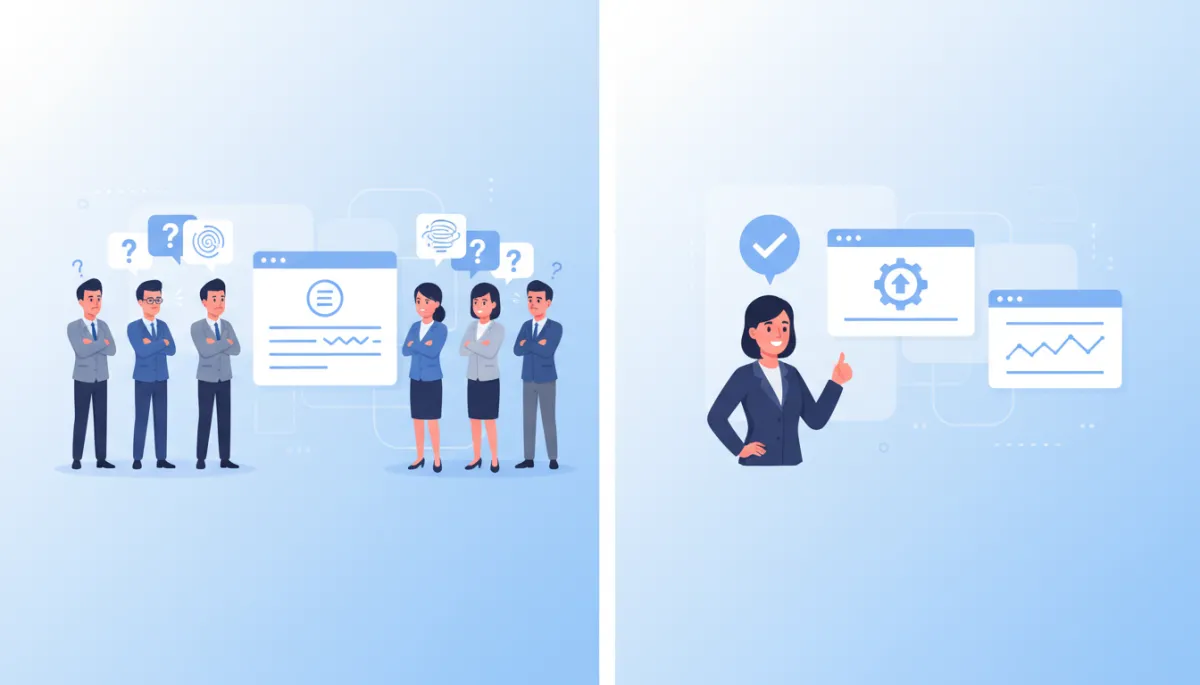
Generic messaging can make a capable team look inexperienced in the eyes of professionals and savvy consumers.
Misaligned messaging shows up in several ways:
Overemphasis on features instead of outcomes, risk reduction, or efficiency.
Vague promises like “make your life easier” instead of measurable benefits.
Case studies and examples that don’t reflect the industries or roles you want to attract.
In B2C, misalignment often looks like:
Talking to “everyone” instead of specific segments (parents, students, remote workers, hobbyists).
Using generic lifestyle imagery that doesn’t reflect your actual buyers’ realities.
Failing to address the real trade‑offs consumers weigh: time, trust, privacy, and long‑term value.
“In complex B2B purchases, 77% of buyers say the last purchase they made was very difficult. Clear, relevant messaging is one of the few levers you control to reduce that friction.”
— Gartner, The B2B Buying Journey
Over time, this erodes your perceived authority. Even if your product or service is strong, professionals may conclude that you are “not quite at their level” simply because your communication isn’t optimized for their expectations and decision criteria. Consumers may quietly assume you’re “just another option” instead of a brand built for people like them. For help tightening your copy, review our framework for conversion‑focused messaging in B2B and B2C.
Danger 3: Longer Sales Cycles and Higher Friction
Selling to professionals almost always involves a multi‑step decision process: evaluation, internal discussion, comparison, and final approval. When your targeting is vague, every one of those steps becomes harder and slower. Your sales team spends more time educating, clarifying, and re‑positioning what you do because your marketing never did that groundwork for the right people in the first place.
Poorly optimized targeting can:
Attract early‑stage researchers instead of serious buyers, clogging your pipeline with low‑priority leads.
Trigger objections that could have been addressed upfront with targeted content and proof points.
Force your team to repeatedly reframe your value for each new stakeholder, instead of starting from a shared, well‑defined narrative.
In B2C, friction shows up differently but is just as damaging: confusing product pages, unclear pricing, missing FAQs, and a lack of reviews all slow the path to purchase. When your targeting is unclear, you end up designing “average” journeys that frustrate everyone instead of tailored paths that help specific segments buy with confidence.
💡 Pro Tip: Research from Forrester shows that companies that tightly align marketing and sales around clear, shared buyer definitions can drive up to 19% faster revenue growth than peers who don’t. The same alignment between marketing and customer experience teams in B2C shortens the time from first touch to repeat purchase. For more on this, see our playbook on aligning marketing and sales around the buyer journey.
The result is a sales cycle that drags on, with more drop‑off points and fewer clean “yes” decisions. In competitive markets, that delay alone can cost you deals—prospects move forward with providers who made it easier to understand and justify the purchase internally, and consumers move on to brands that make buying feel simple and safe.
Danger 4: Weak Positioning Against More Focused Competitors
In every market, there are businesses that decide to “own” a specific professional segment: HR directors in mid‑sized companies, financial advisors serving physicians, IT leaders in manufacturing, and so on. These competitors build tailored solutions, language, and proof around that segment. If you remain broad and undefined, you will almost always lose the comparison in the minds of professionals who want a provider that truly specializes in their world.
The same dynamic plays out in B2C. Niche brands intentionally serve specific lifestyles or identities—plant‑based athletes, remote‑first families, eco‑conscious travelers—and design every touchpoint around those people. Broad, unfocused brands struggle to compete because they feel generic in comparison.
The danger is not just losing individual deals—it’s becoming invisible in the professional networks and consumer communities where recommendations happen. When a CFO asks peers for a vendor recommendation, they rarely say, “We use a general provider that works with everyone.” When a parent asks a friend group for product suggestions, they don’t say, “Any random brand will do.” They mention the firm or brand that is known for solving problems just like theirs, for people just like them. Without optimized targeting, your brand is rarely the one that comes to mind in those moments. To strengthen your competitive edge, review our article on becoming a category leader through sharper positioning.
Danger 5: Poor Use of Professional and Consumer Channels and Platforms
Professionals gather in specific places: industry associations, LinkedIn groups, conferences, niche newsletters, and specialized media. If your targeting isn’t clear, you’re likely under‑investing in these high‑leverage channels or showing up there with content that doesn’t quite fit the context or expectations of the audience.
Consumers also cluster in distinct digital spaces: creator communities on TikTok and YouTube, interest‑based forums and Discord servers, curated email lists, and review platforms. Without a clear B2C strategy, you either chase every channel or miss the few that truly matter to your best buyers.
The risk is twofold. You either:
Miss out entirely on the platforms where serious buyers are actively looking for solutions and ideas, or
Appear out of touch when you do show up, because your content feels promotional instead of insightful and tailored.
“On LinkedIn alone, decision‑makers and C‑level executives consume more than double the content of the average user—yet they quickly ignore anything that doesn’t feel relevant to their role and industry.”
— LinkedIn Marketing Solutions, Sophisticated Marketer’s Guide
In both cases, your competitors who have done the work of defining and understanding their professional and consumer audiences build familiarity, trust, and recognition—long before a formal sales conversation or checkout begins. If channel selection is a sticking point for your team, you’ll find more guidance in our post on choosing the right marketing channels for professionals and consumers.
Danger 6: Stagnant Lifetime Value and Limited Upsell Potential
Professionals rarely buy in isolation. They influence budgets, recommend vendors across departments, and often expand their use of a solution over time. When your business is not optimized for their professional context, you limit your ability to deepen the relationship beyond the first sale.
The same is true of consumers. Loyal B2C customers introduce your brand to friends and family, buy across product lines, and stick with you through price changes and new launches. If your targeting and experience are generic, they might buy once—but they won’t build a long‑term relationship with you.
Without clear professional and consumer targeting, it’s harder to:
Design tiered offerings that align with different levels of responsibility or organizational maturity.
Create content and training that supports internal champions in promoting your solution to other teams or regions.
Spot patterns in usage and feedback that reveal new services or add‑ons professionals would gladly pay for.
On the B2C side, lack of segmentation makes it difficult to:
Build bundles and loyalty programs that reflect different spending levels and behaviors.
Personalize recommendations and offers that feel genuinely helpful, not spammy.
Identify high‑value micro‑segments (for example, repeat purchasers with high referral impact) and design experiences that keep them engaged.
📌 Key Takeaway: Bain & Company’s research on loyalty economics shows that even a 5% increase in customer retention can boost profits by 25–95%—a powerful argument for designing experiences that keep professional and consumer clients engaged and expanding. For more retention ideas, see our guide to increasing lifetime value with smart automation.
The danger is subtle but significant: your revenue per client plateaus, even though you’re serving people who could become long‑term, high‑value partners if you had built your business with their professional and personal journeys in mind.
How to Start Optimizing Your Business for Professional and Consumer Audiences
Avoiding these dangers doesn’t require a complete reinvention overnight. It starts with a deliberate shift in how you define, study, and serve your professional and consumer audiences. A few practical steps:
Clarify your primary professional segments. Identify the top two or three roles, industries, and company sizes that generate the highest value for your business—and focus there first.
Clarify your primary consumer segments (if applicable). Define the core demographics, psychographics, and behaviors of your best B2C customers—how they live, buy, and make decisions—and build specific profiles for each.
Map their decision journey. Understand how they discover options, what information they need at each stage, and who else is involved in approvals or influence—whether that’s a buying committee or a group chat of friends.
Audit your current touchpoints. Review your website, proposals, presentations, product pages, and outreach through the eyes of a busy professional and a distracted consumer: Is it immediately clear why this matters to them?
Align your proof. Build or highlight case studies, metrics, testimonials, and reviews that mirror the roles, industries, and lifestyles of the people you want to attract.
💡 Pro Tip: Talk to three of your best professional clients and three of your best consumer customers (if you serve both) and ask why they chose you over alternatives. Their answers will reveal the language, priorities, and proof points your targeting should emphasize. For a structured interview template, see our resource on customer interview questions that sharpen positioning.
How Jericho Solutions International Can Help You Close the Gap
Knowing you need sharper targeting and smarter technology is one thing; turning that into a practical, staged plan is another. This is where Jericho Solutions International becomes a leverage point for your team instead of “one more project” to manage on your own.
Strategic audience and positioning workshops. We help you clarify your highest‑value professional and consumer segments, define the problems you solve for each, and translate that into clear, differentiated positioning your market can instantly understand.
Message and journey optimization. Jericho Solutions International reviews your existing website, sales assets, funnels, and campaigns, then rebuilds key touchpoints so they speak directly to the way professionals and informed consumers research, compare, and decide.
Smart technology implementation. From CRM and marketing automation to analytics, routing, and personalization, we design and implement a right‑sized tech stack that supports your targeting strategy instead of overwhelming your team.
Measurement and continuous improvement. We establish clear metrics around acquisition, conversion, and lifetime value for both professional and consumer segments, then help you iterate based on what the data—and your customers—are telling you.
📌 Key Takeaway: Jericho Solutions International doesn’t just recommend strategies; we help you operationalize them with the right mix of positioning, process, and technology so your business is built for how professionals and consumers actually buy today—and how they’ll expect to buy over the next five years.
Whether you need a focused 90‑day sprint to modernize your go‑to‑market or a phased roadmap to align teams, channels, and systems, Jericho Solutions International can meet you where you are and accelerate the shift from vague, analog growth to targeted, tech‑enabled momentum.
Conclusion: The Cost of Staying Vague Is Higher Than You Think
Not optimizing your business for professionals and consumers doesn’t always look like a dramatic failure. More often, it looks like slow progress, unpredictable results, and a nagging sense that your efforts should be producing more. The dangers—wasted budget, weakened credibility, slower sales cycles, and limited growth—accumulate quietly until a sharper, more focused competitor overtakes you in the very markets you wanted to lead.
By intentionally defining and optimizing your professional and consumer targeting, you transform how the market perceives you: from a general provider to a trusted specialist. You make it easier for the right people to find you, understand you, and choose you. And in a world where professionals and consumers are overloaded with options, that clarity is not just an advantage—it’s a necessity for sustainable growth. To see where this is heading, look at the businesses that didn’t adapt:
A regional logistics firm that ignored route‑optimization and real‑time tracking software. Within five years, enterprise clients switched to competitors offering live dashboards, automated status alerts, and integrated billing—leaving the firm with shrinking contracts and, eventually, a distressed sale.
A mid‑market professional services agency that relied on manual reporting instead of adopting smart analytics. As clients demanded on‑demand performance dashboards and predictive insights, the agency lost its largest accounts to tech‑enabled rivals and was forced to downsize twice before closing.
A multi‑clinic healthcare group that delayed investing in integrated scheduling, telehealth, and automated follow‑ups. Competitors that embraced these tools improved patient retention and referral volume, while the legacy group saw declining appointments, rising no‑shows, and an eventual acquisition at a fraction of its former valuation.
In each case, the pattern was the same: a failure to optimize for professional buyers and a failure to adopt smart technology that those buyers now assume as standard. The same story is playing out in B2C—retailers that ignored e‑commerce and personalization, service brands that dismissed apps and self‑service, and product companies that overlooked subscriptions and communities are all being displaced by tech‑enabled, audience‑obsessed competitors.
Over the next five years, businesses that stay vague and analog in a digital, data‑driven professional and consumer world won’t just fall behind—they’ll quietly disappear from the consideration set altogether. If you’re ready to take the next step, pair this article with our roadmap on a 90‑day plan to modernize your go‑to‑market so you can turn these insights into concrete action—and consider how partnering with Jericho Solutions International can help you move faster, avoid common pitfalls, and build a growth engine that’s truly aligned with the professionals and consumers you most want to serve.
